Spinal Stenosis, Leaky-Gut, and YELP!

June 17, 2016 by Deborah Penner


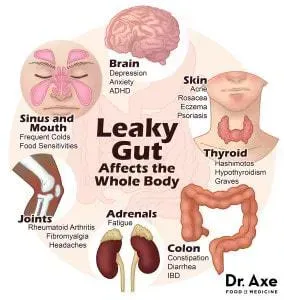
Leaky-gut and inflammation are often the root of the Spinal Stenosis. Elevated systemic inflammation is a common denominator of ALL chronic disease.My dear office manager, Angela, recently pointed out to me that I received a negative YELP review about a year ago. Since I have not had the opportunity to discuss this topic withthe plaintiff directly, I’ve decided to talk about it at large, hoping that she and others might benefit from the conversation.


This “healthy, 55 year old woman” came to me for relief of low-back pain. Perceiving that she had chronic, active arthritic process going on in her lumbar spine, I suggested that she consider embracing an anti-inflammatory diet. I suspected she had a “leaky gut” which was driving inflammatory process in her low back. Subsequently, she went to see her M.D. diagnosed lateral recess stenosis. Somehow, I’m not sure how, this made my assessment wrong in her mind.

Physiotherapy and medications can bring temporary relief from stenosis. But, unless the real cause of the stenosis is addressed it will continue to progress. With few exceptions, elevated systemic inflammation is a primary driving component.

stenosis

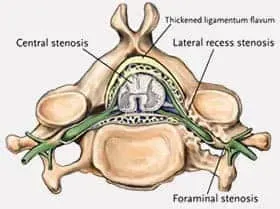
Stenosis is a nasty problem to have. Stenosis means “narrowing” and it involves inflammation and subsequent calcification of the bony tissue of the spine causing narrowing of the channels that the nerves run through.


There are two basic types:

1) Central spinal canal stenosis which chokes the spinal cord and

2) Lateral recess stenosis which chokes the nerves coming off the spinal cord.

In advanced cases, both types can be present.


The symptoms of stenosis include episodic pain in the effected area to begin with. Later, as the nerves become more choked, extremity pain, cramping, numbness, and weakness usually ensue. Unlike osteo-arthritis, which often feels better with activity, the symptoms of stenosis classically worsen with activity


So, here is the simple, yet complex, connection between stenosis and leaky gut syndrome: The intestinal tract is a long tube via which we absorb our nutrients and eliminate our waste. It is made of thin, somewhat elastic tissue. When that tissue becomes inflamed, tiny spaces open up between the cells allowing what is inside the tube to leak out. Waste material outside the gut wall causes inflammatory response, which spreads to the other tissues in the area, including the cartilage and bone of the spine. Additionally, the nerves coming off of the spine in the region are agitated by this inflammation, causing muscle spasm and pain. To top it off, the leakage of inappropriate waste outside the gut wall triggers an autoimmune response which is a significant component of arthritis/stenosis, as well as a long list of other undesirable problems.

Why could even a relatively healthy person’s gut become inflamed?

Stress, modern foods (processing/GMO‘s/chemical farming practices), fruits (sorry, but they ferment!)), grains, drugs, pathogenic microbes, yeast over growth, stress!!


I have had a lot of experience with stenosis in my almost 32 years in practice. Prior to becoming nutritionally savvy on the topic, I did what I could to alleviate acute symptoms, but realized I wasn’t effectively stopping the progress of the disease. This was true of many chronic conditions; arthritis, sciatica, migraine head-aches, high blood sugar, hypertension, weight gain, etc.


In recent years, however, I have seen some truly amazing relief of stenosis and other chronic conditions among patients who are willing to make the changes necessary to reduce their systemic inflammation levels.


Here are a couple of case studies that leap to my mind:


A few years ago there was the 30 something mechanic whose arms and hands were going numb when he gripped a tool. He’d had an MRI and was diagnosed with central cervical spinal stenosis. The anti-inflammatory drugs his primary care doc gave him weren’t working. I worked on him with chiropractic and adjunctive physiotherapy for a couple of months, which brought only temporary relief. Although he claimed to have a good diet and seemed otherwise healthy, I finally suggested he embark on an anti-inflammatory food plan and a liver detox to see what kind of results that might yield. His pain and numbness went away completely within a month. It had not returned when I saw him for a follow-up visit 3 months later. He noted that when he went off the food plan, his symptoms started to return.


There was the gentleman in his 60’s with severe lumbar stenosis who was enrolled in my detox group by his sons who just weren’t going to put up with the fact that their once virile father couldn’t walk more than about 30 feet without sitting down. I was skeptical as to how much I could help with such an advanced case, but the last time I saw the man he was walking over 2 miles every day with no pain or weakness!! He’d also lost his big belly!

I barely recognized him. Hurray!


To date there are no diagnostic tools that I know of that are more advanced than the human hand and the human eye. I have learned to be very observant and sensitive to what my eyes and hands tell me. I notice things like tissue texture and tone that indicate inflammation, spasm, scar tissue, etc.; joint movement, or lack thereof, that indicates joint fixation or arthritis; fluid retention, poochy tummies, skin tone, and of course, postural patterns. I ask what my patients are eating and what is going on in their lives because it is relevant to developing an understanding of their complaints.


My job as a doctor is to help my patients be healthier and I take my job very seriously. While I don’t have all the answers, I have managed to figure out a few important things and one thing I know for sure is that elevated systemic inflammation is the common denominator of ALL chronic disease. If I didn’t share my knowledge and observations with those who come to me for help, I would be guilty of malpractice!

 Know this: I will always give my patients the best of what I have to give whether they want to hear it or not.


For more info about leaky gut and some cool graphics check out: https://draxe.com/4-steps-to-heal-leaky-gut-and-autoimmune-disease/


From My Gut,


Dr. Penner

Watercolor-style cows grazing in a green pasture under a bright sky
By Deborah Penner June 25, 2025
March 25, 2025 by Deborah Penner In a world full of modern seed oils and synthetic skincare products, tallow is making a comeback—and for good reason. In his latest article, Dr. Robert Malone explores this time-honored fat that has nourished and supported humans for generations. From its dense nutritional profile to its unique benefits for the skin, tallow stands out as a versatile, shelf-stable, and highly bioavailable source of essential fatty acids, fat-soluble vitamins (A, D, E, K2, and B12), and anti-inflammatory compounds like conjugated linoleic acid (CLA). Dr. Malone breaks down what tallow is, how it’s rendered, and why sourcing it from grass-fed animals matters. He covers its historical culinary use, superior storage potential, and modern skincare advantages. He also shares how to make tallow at home, along with tips for storage, sourcing, and practical applications—even including a nod to traditional meat drippings. If you’re interested in ancestral nutrition, reducing toxic exposures, or reclaiming sustainable practices in your home and kitchen, this article is a must-read.  Read the full article on Robert Malone’s website to explore the health benefits, uses, and how-to of tallow.
Plated roasted lamb chop with herbs, berries, and lemon slices on a white dish
By Deborah Penner March 20, 2025
March 20, 2025 by Deborah Penner If you’re looking for a powerful way to support metabolism, joint health, and overall vitality—without reaching for another supplement—consider this often-overlooked cut of meat: the shank. In a recent article on Mercola, Ashley Armstrong highlights why shanks (from beef, pork, or lamb) may actually outperform steaks when it comes to nutrient density and health benefits. Rich in collagen and connective tissue, shanks offer a more balanced amino acid profile than typical muscle meats. When cooked low and slow, they yield gelatin—a form of collagen that’s easier for the body to absorb. This provides crucial support for the skin, joints, bones, and gut, while also boosting metabolic health through glycine, a key amino acid that helps regulate inflammation and energy production. Armstrong also explores the wisdom of traditional diets, which prioritized nose-to-tail eating and naturally included more collagen-rich foods. Today’s steak-heavy habits miss out on these benefits, making shanks an easy and affordable way to restore that balance. The article includes 15 time-tested recipes from around the world, and a video walking through Armstrong’s favorite braising method.
Silhouetted figure facing a vivid watercolor sky with a cell tower and power lines at sunset
By Deborah Penner March 17, 2025
March 17, 2025 by Deborah Penner Electromagnetic fields (EMF) and 5G technology have rapidly expanded across the globe with little consideration for their long-term impact on human health and the environment. Dr. Mark Trozzi, a dedicated physician and researcher, explores the hidden dangers of EMF exposure and the heightened risks that come with 5G. He reveals how governmental agencies, despite being informed of the concerns, have remained powerless in the face of telecom industry influence. Even before the rollout of 5G, studies linked EMF exposure to a range of serious health issues, including cancer, infertility, neurological disorders, and cardiovascular disease. Dr. Trozzi highlights that 5G takes these risks further with the use of higher frequencies, such as 60 GHz, which directly interact with oxygen molecules and could disrupt their ability to bind with hemoglobin. He also sheds light on the military origins of some 5G frequencies and the aggressive destruction of trees to facilitate stronger signals—an alarming environmental consequence. Through his research, Dr. Trozzi underscores the urgent need to recognize EMF radiation as a major public health threat. He calls for awareness, education, and practical steps to mitigate exposure, drawing attention to the work of leading experts like Dr. Devra Davis and Dr. Arthur Firstenberg. To learn more about the critical health risks of 5G and EMF exposure, read the full article and watch the video at drtrozzi.news .
Person crouching in a grassy field beside a vivid blue, orange, and pink fire-like landscape
By Deborah Penner March 11, 2025
March 11, 2025 by Deborah Penner Wildfire smoke exposure has profound health consequences, yet its impact on chronic illness remains widely overlooked. A Midwestern Doctor explores the link between particulate matter inhalation and conditions such as cardiovascular disease, lung disease, and cognitive decline, emphasizing the role of glutathione in protecting lung tissue. The article highlights the lessons learned from wildfire-related illnesses, particularly how exposure worsens pre-existing inflammatory conditions and contributes to long-term health deterioration. It also sheds light on the parallels between wildfire toxicity and other environmental exposures, such as pollution and pharmaceuticals, that can push individuals past their body’s threshold for chronic illness. One of the most promising solutions discussed is nebulized glutathione, which replenishes the lungs’ natural defense system, helping mitigate damage from smoke inhalation and potentially offering relief for those suffering from COPD. Additionally, the therapeutic potential of DMSO in respiratory conditions is examined, alongside other integrative approaches for addressing the systemic effects of wildfire exposure. To understand how wildfire illness can reshape our approach to lung health and chronic disease, read the full article by A Midwestern Doctor on The Forgotten Side of Medicine .
By Deborah Penner March 8, 2025
Key Takeaways from the Interview
By Deborah Penner February 24, 2025
Certain substances, such as aluminum, are known to reduce zeta potential, increasing the likelihood of sluggish blood flow and microcirculatory issues. On the other hand, practices like optimizing mineral intake, reducing toxin exposure, and supporting kidney function can help restore and maintain a healthy zeta potential . For a deeper dive into how zeta potential affects overall health and what can be done to support it, read the full article on Unbekoming Substack .